
A Local Peru Trekking Company
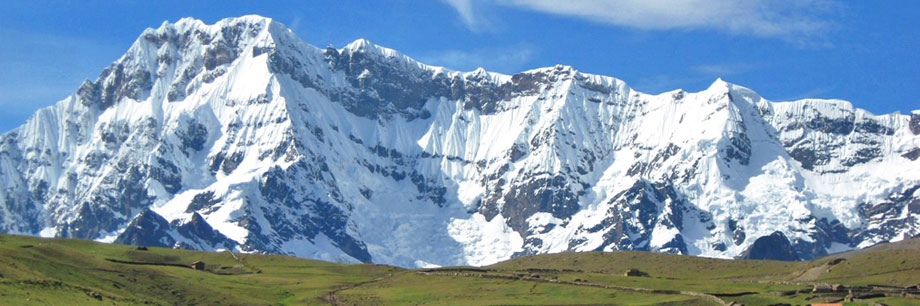
Our Local Peru trekking company adores the Andes. We are from here; we were born here; we work here; we are students of these mountains. They are our ancestors.
People usually ask us two questions.
Why are we called Saqra’s Trek Auqui Peru? And where did the name Auqui Peru come from?
The answer to both takes us back to the Andes, long before Peru existed as a country and long before the first Europeans arrived on these shores. To understand our name, you first need to understand the world of the Incas.
The Meaning of Auqui
More than five hundred years ago, the Andes formed the centre of Tawantinsuyu, the empire we know today as the Inca Empire. The name comes from Quechua, the language still spoken by thousands of people across Peru. Tawa means four and suyu means region, so Tawantinsuyu simply means “The Four Regions Together.” These regions are called Antisuyo, Qollasuyo, Contisuyo, and Chinchaysuyo…. the four corners of the Inca Empire.
From the city of Cusco, the empire expanded north into present-day Ecuador, south into Chile and Argentina, and east towards Bolivia. Roads crossed mountains, suspension bridges linked deep valleys, and messengers carried information across thousands of kilometres without horses or wheels.
At the head of this vast empire stood the Sapa Inca, the emperor. The person chosen to succeed him was known as the Auqui.
Many people think the title automatically belonged to the eldest son, but that wasn’t how the Incas saw leadership. The future ruler had to prove he was capable of governing the empire. From an early age, the Auqui learned alongside the Sapa Inca, travelling through the empire, observing spiritual ceremonies, learning military strategy and understanding the responsibilities that came with leading millions of people in what we now call South America.
The title had to be earned. Knowledge comes from experience. Respect comes from understanding. Neither happens overnight. Those are values that have shaped the way we have always travelled through Peru.
From Auqui Peru to Saqra’s Trek
When we first started our locally owned Peru travel company, the name Auqui Peru reflected our admiration for Peru’s history and the traditions that continue to dictate how we live in the Andes. We are an authentic family owned trekking company Peru.
The Meaning of AUQUI PERU
This is the term for the spirit of the mountain, in which the local people still believe… in the energy and the force of nature.
As the years passed, something became obvious. People didn’t know us because of our name. They knew us because we spent our lives in the mountains. We are local Indigenous Peruvian guides, which makes us an authentic Peru tour operator.
Most of our tours and treks begin before sunrise. They follow ancient stone paths and trails, climb high mountain passes, cross remote valleys, and visit Andean communities where Quechua is still spoken as a first language. Trekking wasn’t just one of the things we offered. It had become who we were.
That is how Saqra’s Trek Auqui Peru was born.
What Does Saqra Mean?
If you travel through the Andes for long enough, you will eventually hear the word Saqra. Like many Quechua words, there isn’t one perfect translation.
Some people describe a Saqra as a mischievous spirit. Others associate it with the supernatural world that appears in Andean stories, music, and festivals. During celebrations such as the famous Virgen del Carmen festival in Paucartambo, Saqras dance across rooftops wearing elaborate masks, teasing the crowds below. They are playful rather than frightening, reminding people that the Andes have always been a place where history, faith, and ancient beliefs exist side by side.
For us, the name represents something slightly different.
Curiosity. Adventure. That amazing feeling of getting away from the ordinary.
Every trail tells its own tales. Every mountain has its own character. Sometimes the most amazing experiences happen where there are no crowds, no ticket offices and no famous viewpoints. They happen when an Andean shepherd stops to talk to you, when condors appear overhead, or when you reach a mountain pass and realize you haven’t seen another traveller/trekker for hours. That is the Peru we have always wanted to share with you and why you should travel with Saqras Trek Auqui Peru, a Local Peru trekking company.
Going Beyond Being A Local Peru Trekking Company
Today, Saqra’s Trek by Auqui Peru remains exactly what it has always been: a family-owned trekking company in Peru, based in the Inca capital of Cusco and built by people who know these mountains because they have grown up in them.
Being a locally owned Peru travel company is not simply about having an office in Cusco. It means the people planning your Peru trek or tour actually live here. Our experienced Peru trekking guides hike these trails throughout the year, not just during the busy season. Many of them come from rural Andean communities where Quechua is still spoken at home and where the knowledge of the mountains has been passed from one generation to the next.
That local knowledge is what changes the experience.
Things like understanding how quickly the weather can change at 4,000 metres altitude. Recognizing native plants still used in traditional medicine. It means knowing the stories behind destinations that do not appear in guidebooks.
As local Cusco trekking experts, we believe the best adventures are not measured by how many places you can visit in a week. They are measured by the experience you have and the people you meet along the way.
There are many travel companies offering treks in Peru. Our goal has never been to be the biggest or compete with the massive agencies. However, we are Peru travel experts. We simply want to remain the authentic Peru travel company that introduces and guides visitors to explore real life in the Andes. The mountains, rural communities, and ancestral traditions we are proud to call ours.
Because long after the trek is over, that is usually what people remember most.[/vc_column_text][/vc_column][/vc_row]